
Contemporary İstanbul üzerine
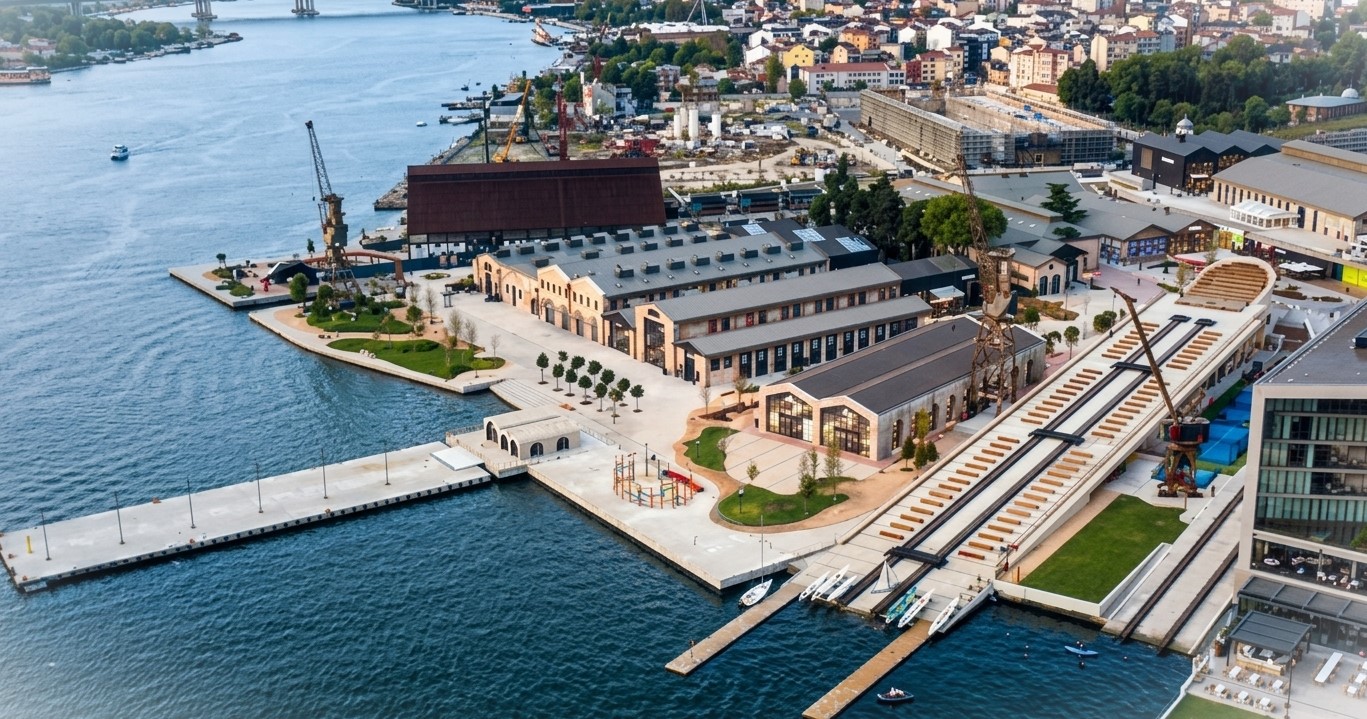
Contemporary İstanbul’un Tersane İstanbul’da yapılması, yalnızca bir sanat fuarının mekân seçimi olarak görülemez. Çünkü seçilen mekân, sanatın bugün içinde bulunduğu ekonomik ve kültürel ilişkilerden bağımsız değildir. Bu nedenle burada yalnızca fuara değil, sanatın içinde yer aldığı değer düzenine de bakmak gerekiyor.
Tersane, İstanbul’un yüzyıllar boyunca üretimle ve denizle kurduğu ilişkinin taşıyıcısı olan tarihsel bir alandır. İBB’nin kayıtlarında Haliç Tersanesi, 15. yüzyıldan günümüze gelen kültürel, mimari ve endüstriyel özgünlüğe sahip bir alan olarak tanımlanıyor. Alanda 17 sanayi yapısı, 2 yerüstü kalıntı, 3 sivil mimari örneği ve 7 anıt eser bulunuyor. Aynı alan, 2013’te 49 yıllığına yap-işlet-devret modeliyle; otel, apart otel, ofis, ticari birimler, yeme-içme alanları, kültür ve kongre merkezi, eğlence merkezleri ve yat limanlarını içeren bir dönüşüm projesine açıldı. İBB’nin kaydına göre projeye 2015’te dört meslek odasının İstanbul şubeleri tarafından ortak dava da açıldı.
Bugün burada Contemporary İstanbul var.
Bu yan yana geliş üzerinde düşünmek gerekiyor.
Çünkü sanat artık yalnızca sanat eserinin kendisiyle değil; galeri, koleksiyoner, müze, fuar, marka, yatırım ve görünürlük ilişkileri içinde dolaşıyor. 2025’te Contemporary İstanbul’un 20. edisyonunda 16 ülkeden 579 sanatçının 931 eseri yer aldı.
Fuarın ekonomik yönünü bundan dolayı görmezden gelemeyiz.
Ama ekonomik olanı görmek başka, onu sanatın ölçüsü haline getirmek başkadır.
Takiyettin Mengüşoğlu’nun düşüncesi burada bizim için önemli bir ayrım yapıyor.
Mengüşoğlu, insan hayatındaki değerleri yüksek değerler, araç değerler ve davranış değerleri olarak ele alır. Çıkar, yarar ve maddi varlıkla ilgili olanlar araç değerler alanındadır. Yüksek değerler ise doğruluk, dürüstlük, adalet, güven, saygı, sevgi gibi etik değerlerdir. Araç değerler hayatın dışına atılacak şeyler değildir. Sorun, onların yüksek değerlerin yerine geçmesidir. Mengüşoğlu’na göre araç değerleri yüksek değerlerin buyruğunda tutan insanın eylemlerinde nesnellik ortaya çıkar.
Buradaki düşünce sanat alanı için son derece açıktır.
Para sanata düşman değildir.
Piyasa da tek başına sanatın karşıtı değildir.
Bir sanatçının emeğinin karşılığını alması, bir galerinin ayakta durması, bir eserin alınıp satılması kendi başına etik bir sorun oluşturmaz.
Sorun, paranın ve çıkarın sanatın yönünü belirleyen değere dönüşmesidir.
O zaman araç ile amaç yer değiştirir.
Eser, değeri için değil dolaşımı için önem kazanmaya başlar.
Sanatçı, yaptığı işten çok piyasadaki görünürlüğüyle ölçülür.
Kurum, sanat üzerindeki sorumluluğundan çok taşıdığı marka değeriyle değerlendirilir.
Mekân, taşıdığı tarih ve gerçeklikten çok yeni kimliğiyle önem kazanır.
Ve sanat, bütün bu ilişkilerin içinde kendisine bir yer bulmakla yetinir.
Mengüşoğlu’nun “değer duygusu aldanması” dediği mesele tam burada düşünülmelidir: araç değerlerin yüksek değerlerin yerine geçmesi. Mengüşoğlu bu durumun yalnızca bireysel bir sorun olarak kalmayabileceğini, bir dönemin merkezi değeri haline gelebileceğini ve böyle bir durumda yıkıcı sonuçlar doğurabileceğini söyler.
Bugün sanat alanında sermaye ile mesafenin yeniden düşünülmesi bu nedenle gereklidir.
Bu, sermayeyi sanat alanının dışına çıkarmak çağrısı değildir.
Sermayenin sanatın değerlerini belirlemesine izin vermemek çağrısıdır.
Aradaki fark önemlidir.
Çünkü sanatın özgürlüğü, piyasadan tamamen uzak durmasıyla değil; piyasanın değer ölçülerini kendi değeri haline getirmemesiyle korunabilir.
Bu noktada sanat piyasasının bugünkü yapısını da görmek gerekiyor. Art Basel ve UBS’nin 2026 Global Art Market Report’una göre 2025’te sanat fuarlarından yapılan satışlar galerilerin toplam cirosunun %35’ine ulaştı; bu, 2022’den bu yana görülen en yüksek oran. Rapor, fuarların galerilerin ekonomik faaliyetindeki ağırlığının arttığını açıkça ortaya koyuyor.
Tersane İstanbul’da asıl soru da budur.
Tarihsel bir tersane alanının yeni bir ekonomik ve kültürel kullanıma açılması başlı başına sanatın suçu değildir. Fakat sanat böyle bir dönüşümün içine girdiğinde, yalnızca orada bulunup bulunmadığını değil, orada neyi görünür, neyi görünmez kıldığını da düşünmek zorundadır.
Sanat bir mekâna yalnızca prestij taşıyorsa, o mekânın taşıdığı sorunları da örtebilir.
Bir tarihsel alanın dönüşümüne sanatın adı eklendiğinde, dönüşüm yalnızca ekonomik değil, kültürel bir anlam da kazanır.
İşte sanatçı ve sanat kurumunun sorumluluğu burada başlar.
Kullandığı mekânın geçmişini bilmek.
İçinde bulunduğu ekonomik ilişkileri görmek.
Kendi varlığının o ilişkilere ne kattığını düşünmek.
Ve gerektiğinde kendi çıkarına aykırı düşse bile mesafesini koruyabilmek.
Mengüşoğlu’nun yüksek değerlere göre hareket eden “hakiki insan” anlayışında önemli bir nitelik burada belirir: insan, maddi şeyleri mutlaklaştırmaz; karar verirken kendi çıkarını gözetmek yerine, kendi aleyhine de olsa nesnelliğini korur.
Sanat için de bunun karşılığı vardır.
Sanat, kendisine sunulan her görünürlüğü kabul etmek zorunda değildir.
Her mekân yalnızca güzel bir fon değildir.
Her davet yalnızca bir fırsat değildir.
Her görünürlük değer değildir.
Ve sanatın ekonomik değeri, sanatın kendi değerinin yerine geçtiğinde ortaya çıkan şeyi başarı diye adlandırmak, Mengüşoğlu’nun diliyle söylersek, bir değer duygusu aldanmasına dönüşebilir.
Bugün ihtiyacımız olan şey sanat ile sermaye arasındaki bütün ilişkileri koparmak değil; aralarındaki mesafeyi yeniden kurmaktır.
Sanatın sermayeye ihtiyacı olabilir.
Ama sanatın sermayenin değer ölçüsüne ihtiyacı yoktur.
Sanatçı ve sanat kurumunun sorumluluğu tam burada başlar:
Araç olanı amaç haline getirmemek.
Kendi değerini, kendisini taşıyan ekonomik değere teslim etmemek.
Ve gerektiğinde, sanatın bulunduğu yerin kendisine de bakabilmek.
dB, 2026
THE VALUE OF ART AND DISTANCE
On Contemporary Istanbul
Contemporary Istanbul taking place at Tersane Istanbul cannot be understood simply as a choice of venue. The site is not separate from the economic and cultural relations within which art operates today. What is at stake, therefore, is not only the fair itself, but the values that shape the field in which it takes place.
Tersane is a historic site shaped by Istanbul’s centuries-long relationship with production and the sea. According to records of the Istanbul Metropolitan Municipality, Haliç Shipyard is a site of cultural, architectural and industrial significance extending back to the fifteenth century. The area includes 17 industrial structures, two above-ground remains, three examples of civil architecture and seven monuments. In 2013, the historic shipyard area was tendered under a 49-year build-operate-transfer model for a large development project including hotels, apart hotels, offices, commercial units, food and beverage areas, a cultural and congress centre, entertainment facilities and two marinas. In 2015, four professional chambers in Istanbul jointly filed a lawsuit concerning the project.
Today, Contemporary Istanbul takes place there.
That conjunction deserves attention.
Art now circulates not only through artworks themselves, but through networks of galleries, collectors, museums, fairs, brands, investment and visibility. In 2025, the twentieth edition of Contemporary Istanbul brought together 579 artists and 931 works from 16 countries.
There is no reason to ignore the economic dimension of a fair.
But recognizing the economic dimension is one thing; allowing it to become the measure of art is another.
This is where Takiyettin Mengüşoğlu offers an important distinction.
Mengüşoğlu understands human values in terms of higher values, instrumental values and values expressed in conduct. Interest, utility and material possessions belong to the sphere of instrumental values. Higher values include truthfulness, honesty, justice, trust, respect and love. Instrumental values are not things to be excluded from life. The problem begins when they take the place of higher values. For Mengüşoğlu, objectivity in human action depends on keeping instrumental values subordinate to higher values.
The implication for art is direct.
Money is not the enemy of art.
Nor is the market, by itself, art’s opposite.
There is nothing inherently unethical in an artist being paid for their work, a gallery sustaining itself, or an artwork being bought and sold.
The problem begins when money and self-interest become the values that determine the direction of art.
At that point, means and ends change places.
An artwork begins to matter less for what it is than for how it circulates.
The artist is measured less by the work than by market visibility.
An institution is valued less for its responsibility to art than for the brand value it carries.
A site is valued less for its history and reality than for the identity newly assigned to it.
And art settles for finding a place within these relations.
Mengüşoğlu’s notion of “value delusion” becomes relevant here: instrumental values taking the place of higher values. He also considers the possibility that such a displacement may cease to be merely an individual matter and become a central value of an entire period, with destructive consequences.
This is why the distance between art and capital needs to be reconsidered today.
This does not mean calling for capital to be removed from the field of art.
It means refusing to allow capital to determine the values of art.
The distinction matters.
Art does not preserve its freedom by withdrawing entirely from the market. It preserves it by refusing to make the market’s measures its own.
The contemporary art market makes this tension visible. According to the Art Basel and UBS Global Art Market Report 2026, art-fair sales accounted for 35% of total dealer turnover in 2025, their highest share since 2022. The report describes this as part of the continuing importance of fairs to the economic activity of galleries.
This is where the real question at Tersane Istanbul begins.
A historic shipyard being given new economic and cultural functions is not, in itself, a problem caused by art. But when art enters such a transformation, it has to ask more than whether it is present. It has to ask what it makes visible and what it leaves unseen.
If art brings only prestige to a site, it may also help conceal the problems carried by that site.
When the name of art becomes attached to the transformation of a historic place, that transformation acquires not only an economic meaning but a cultural one.
This is where the responsibility of artists and art institutions begins.
To know the history of the place they use.
To see the economic relations in which they participate.
To consider what their presence adds to those relations.
And, when necessary, to maintain their distance even when doing so runs against their own interests.
This is also where an important quality of Mengüşoğlu’s “genuine human being” becomes visible: a person does not absolutize material things and does not surrender objectivity to self-interest, even when doing so may work against their own interests.
There is a corresponding responsibility for art.
Art does not have to accept every form of visibility offered to it.
Not every place is merely a backdrop.
Not every invitation is simply an opportunity.
Not every form of visibility is a value.
And when the economic value of art takes the place of art’s own value, calling the result success may itself become, in Mengüşoğlu’s terms, a form of value delusion.
What is needed today is not the severing of every relationship between art and capital, but the recovery of a distance between them.
Art may need capital.
But art does not need capital’s measure of value.
The responsibility of the artist and the art institution begins precisely here:
Not to turn means into ends.
Not to surrender their own value to the economic value that carries them.
And, when necessary, to look at the place where art itself has chosen to stand.
dB, 2026
Kaynaklar
Mengüşoğlu, Takiyettin. İnsan Felsefesi. İstanbul: Remzi Kitabevi, 1988.
Mengüşoğlu, Takiyettin. Felsefeye Giriş. İstanbul: Remzi Kitabevi,
Mengüşoğlu, Takiyettin. Değişmez Değerler Değişen Davranışlar. İstanbul: Remzi Kitabevi.
İstanbul Büyükşehir Belediyesi, Şehir Planlama Müdürlüğü. “Haliç Port (Tersane İstanbul).”
Anadolu Ajansı. “Contemporary İstanbul’un 20. edisyonu sanatseverlerle buluştu.” 24 Eylül 2025.
McAndrew, Clare. The Art Basel and UBS Global Art Market Report 2026. Arts Economics / Art Basel and UBS, 2026
Yazar

-
kunduz is. zool. Kemirgenlerden, su kıyılarında yaşayan,
ev gibi kat kat güzel yuvalar ve su setleri kuran, becerikli,
derisi değerli bir hayvan (castor). T.D.K. 1959
Son Yazıları
 Felsefe25 Eylül 2026SANATIN DEĞERİ VE MESAFESİ
 Uncategorized11 Eylül 2026Fark Edilmek
 Eğitim25 Ağustos 2026BASIN BİLDİRİSİ: Yarım Yüzyıllık Sanat Eğitimi Ekosistemi Kaybolma Riskiyle Karşı Karşıya
 Eğitim19 Ağustos 2026Üniversiteler Kışla Değildir”: Prof. Dr. M. Zeki Kuşoğlu ile Söyleşi









İlk yorum yapan siz olun